
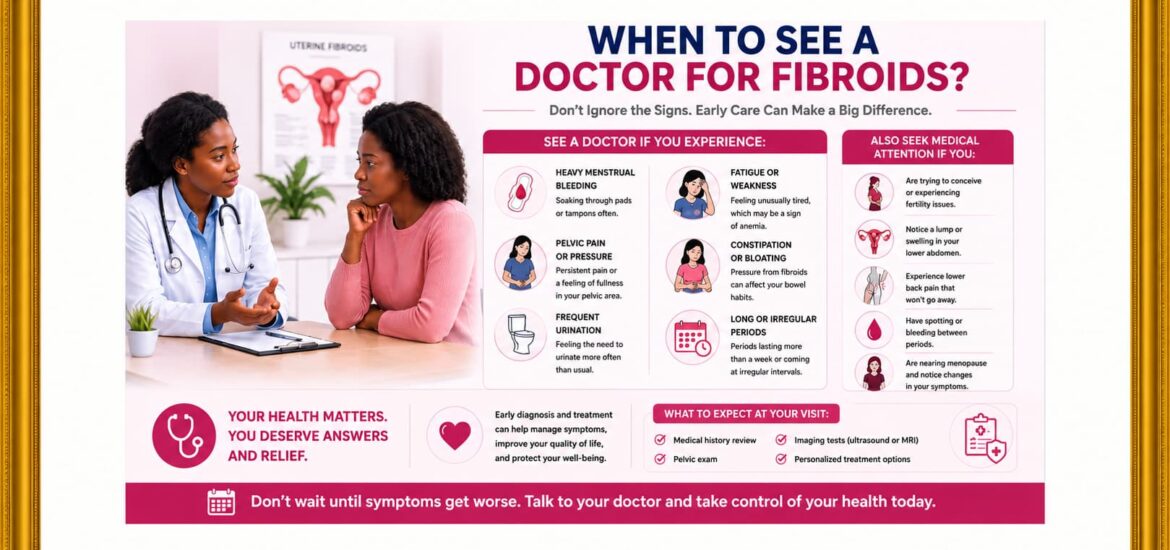
Fibroids are growths which occur in or around the uterus in many women during reproductive years and are not cancerous. Some women may have symptoms but not enough to affect their daily activities, while others may have symptoms that do affect their daily activity. While not fully understood, hormones, genetic predisposition and age can be a factor in the development of fibroids. Understanding the signs of when to get medical help can prevent complications and help get the treatment started if there is a need.
Abnormal bleeding or bleeding of menses is too frequent.
Unusual heavy or prolonged bleeding is one of the most common reasons that people consult a doctor about the presence of fibroids. For some women, periods may last longer than usual, clots may be big and women may need to change sanitary products several times.
Too much bleeding can cause iron-deficiency anemia, which can cause fatigue, weakness, dizziness, and make life difficult. When menses are heavy, and continue on a regular basis for several cycles, it is important to get medical evaluation.
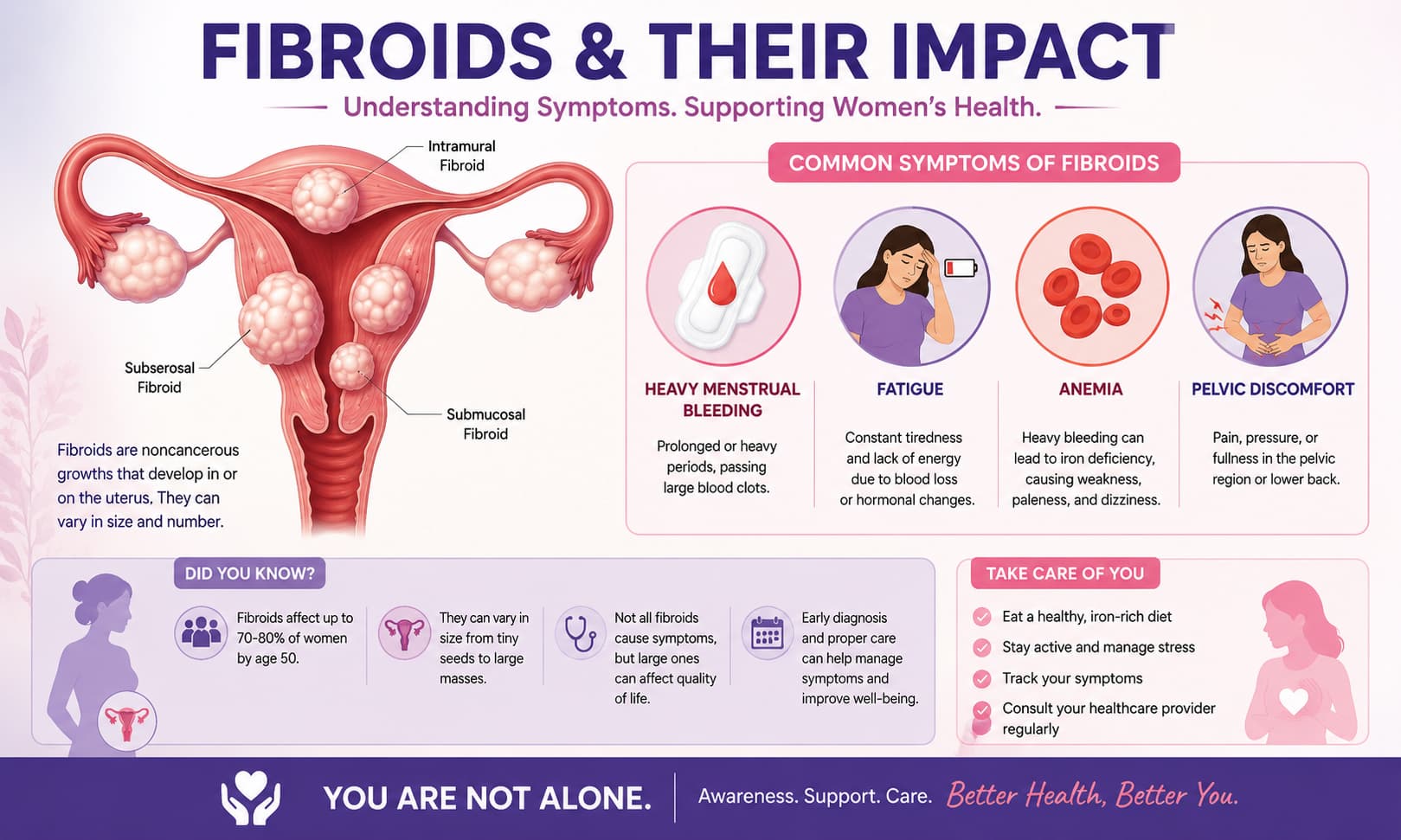
Persistent pain or pressure in the pelvis.
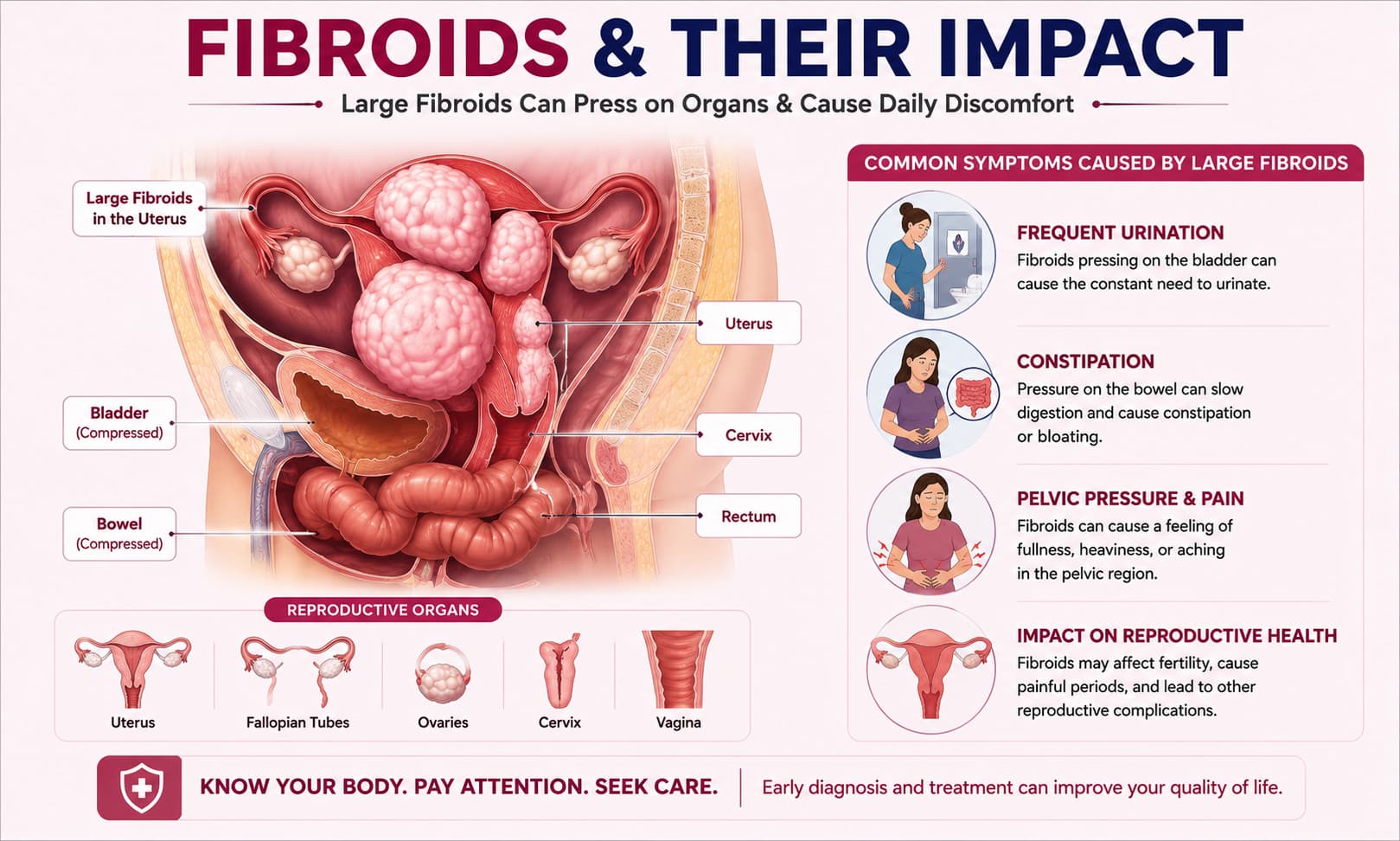
If the fibroids are large, they can be pushing on nearby tissues and organs, and this can lead to persistent problems with pain and discomfort in the pelvis, lower abdomen, lower back, or during sex. As the fibroid grows, it can compress the bladder, bowel or pelvic muscles.
If women have recurrent or persistent pain in their pelvis, they should seek medical advice for a diagnosis and individual treatment plan.
Frequent urination, constipation or fertility issues.
Growing fibroids can compress the bladder and lead to urination or incomplete emptying of the bladder. The bowel pressure can also cause constipation, bloating or abdominal discomfort.
Fibroids can cause certain women to be unable to become pregnant or to suffer from pregnancy problems. It is recommended that men and women who are thinking about becoming pregnant or are concerned about their fertility talk with their health care provider about fibroids.
Signs that may need medical attention which are not covered in the other boxes above.
Other symptoms that require immediate medical attention include profuse abdominal pain, a sudden increase in abdominal size, menstrual bleeding between periods, extreme tiredness, or signs of anemia like dizziness, tiredness, or shortness of breath.
Your healthcare provider may also suggest imaging tests and regular checkups on the size and position of the fibroids, as well as recommended treatments. Symptoms may be treated with a fibroid procedure, medication or even minimally invasive treatment or a fibroid surgery if clinically appropriate.
Releasing emotional blockages to allow for Women’s Wellness to come through.
The first step in dealing with fibroids is to receive an accurate medical diagnosis and to take professional medical advice. Eating well, keeping a healthy weight, getting regular exercise, managing stress and having routine gynecological exams are all part of being healthy throughout your reproductive system.
Support Your Fibroid Health With Rebootar Herbal Bitters .Get it here
Learn More About the Rebootar DD Herbal Wellness Formula – Click Here
Rebootar Herbal Bitters is made with a unique blend of herbs that help with general well-being, proper digestion, circulation, metabolism and body detox. It doesn’t diagnose, treat, cure or prevent fibroids nor is it meant to supplant a fibroid operation when needed, however it is an alternative for those women who want to adopt a healthy lifestyle along with medical treatment.
Conclusion
Knowing the symptoms of fibroids will allow you to get the care you need early to prevent symptoms from getting worse. Early evaluation enables healthcare providers to suggest the most suitable treatment options for you, whether you have heavy bleeding, pelvic discomfort, urinary issues, worry for large fibroids, or are experiencing other symptoms. Early intervention can contribute to the preservation of reproductive health and to increase quality of life, along with healthy lifestyle practices and routine medical exam.
