

It is important for families to understand sickle cell disease, particularly in areas with higher disease prevalence. Sickle cell disease is a blood condition which is inherited and leads to the alteration of the shape of red cells to a sickle shape rather than a round shape. Educating families about the causes of sickle cell disease, the signs and symptoms of sickle cell disease, and early medical treatment can help to facilitate better care of family members who have this lifelong disease.
It is important to understand Sickle Cell Disease.
Normal red blood cells are able to flow through the blood vessels and carry oxygen around the body. Sickle Cell disease is a disorder in which the abnormal red blood cells are rigid and concave.
Sickle cell disease is a genetically passed on disease. Both parents must pass on the sickle cell gene to their child if they are to be born with the disease. The disorder is passed on from generation to generation so it is not contagious and can’t be picked up during physical contact. Individuals who are intending a family should be aware of their genotype and should have the opportunity to obtain genetic counselling — as appropriate.
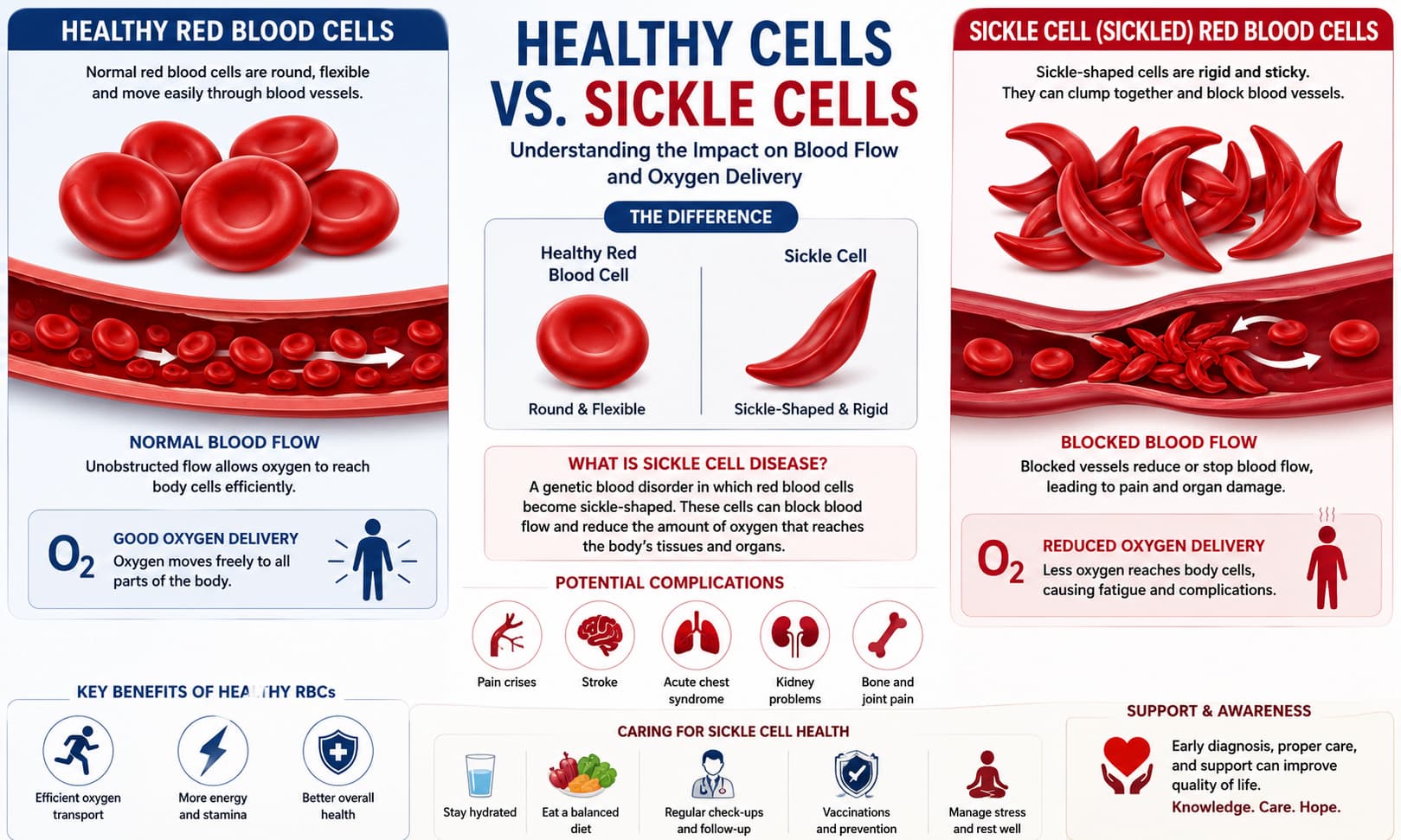
Common Symptoms and Complications
Fatigue, palpitations, swollen hands and feet, jaundice, slow growth in children and frequent infections are common signs and symptoms of sickle cell disease, but they are not experienced by everyone.
A pain crisis also referred to as sickle cell disease pain is one of the most difficult complications. Episodes are when sickle-shaped cells clog blood vessels and deprive tissues of oxygen, leading to sudden, severe pain that may require immediate medical attention.
Early detection of sickle cell disease signals means families can take early medical action to help lower the risk of complications.
Everyday strategies to promote health and wellness
Adopting healthy habits is crucial in caring for people with sickle cell disease. Staying well hydrated, having a balanced diet, sleeping well, avoiding extremes in temperature, maintaining good hygiene and keeping regular medical checks help to promote all round health.
While these habits won’t cure the disease, they can make it easier to keep triggers for pain associated with sickle cell disease at bay or make it easier to manage daily living.
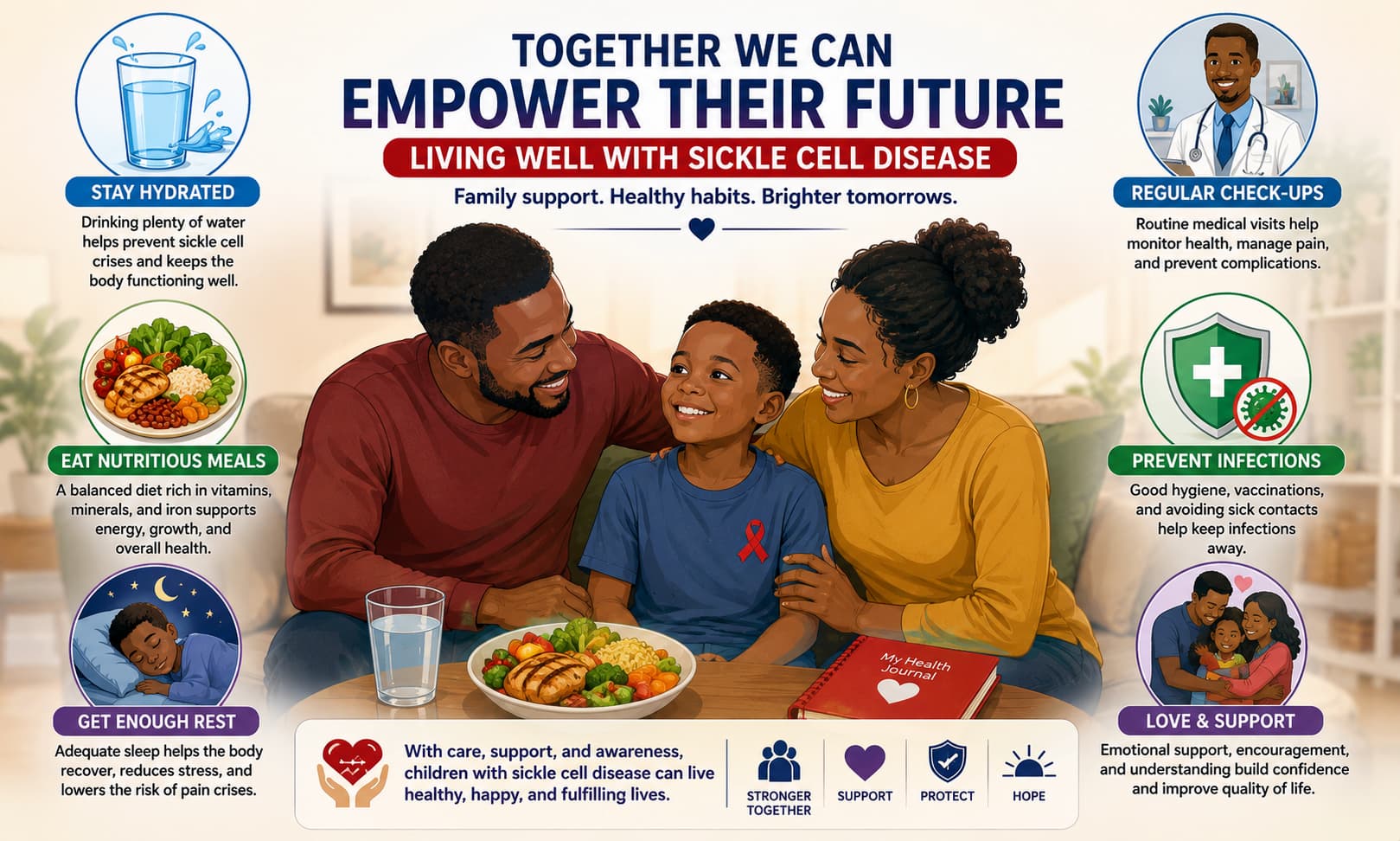
Immediately seek medical care when you experience any of the following:
In case of severe pain, fever, shortness of breath, chest pain, during a sudden weakness, vision changes, persistent swelling or signs of stroke, families should immediately seek medical attention for persons with sickle cell disease.
Early treatment can minimize complications and optimize outcomes. Periodic check-ups also help health care professionals track sickle cell disease symptoms and make treatment adjustments as necessary to the plan.
Get REBOOTAR-CD (CARDIO) Herbal: Aiding in Overall Wellness With Sickle Cell. Get It Here
Learn More About REBOOTAR-CD (CARDIO) Herbal Formula – Click Here
Ongoing medical treatment, adequate fluid intake, good nutrition, preventing infection, regular health checks and following health care advice are important to living well with sickle cell disease.

REBOOTAR-CD (CARDIO) Herbal contains a blend of carefully selected herbs to provide a broad range of health benefits, including healthy digestion, circulation, metabolism and natural detoxification processes as well as support for overall wellness. It is not designed to diagnose, treat, cure, or prevent sickle cell disease, to relieve sickle cell disease pain, nor to replace evidence-based medical care, but some people do use it as part of their healthy lifestyle plan that includes information from their health care provider.
Conclusion
Family education is an important component of the path to enhancing the lives of individuals with SCD. Families can promote better health outcomes by knowing the causes of SCD, how to identify the signs and symptoms of SCD, and act quickly when symptoms of SCD appear. Early awareness can have a huge impact on the long-term health and well-being when coupled with good daily habits, routine medical care and continued family support.
