
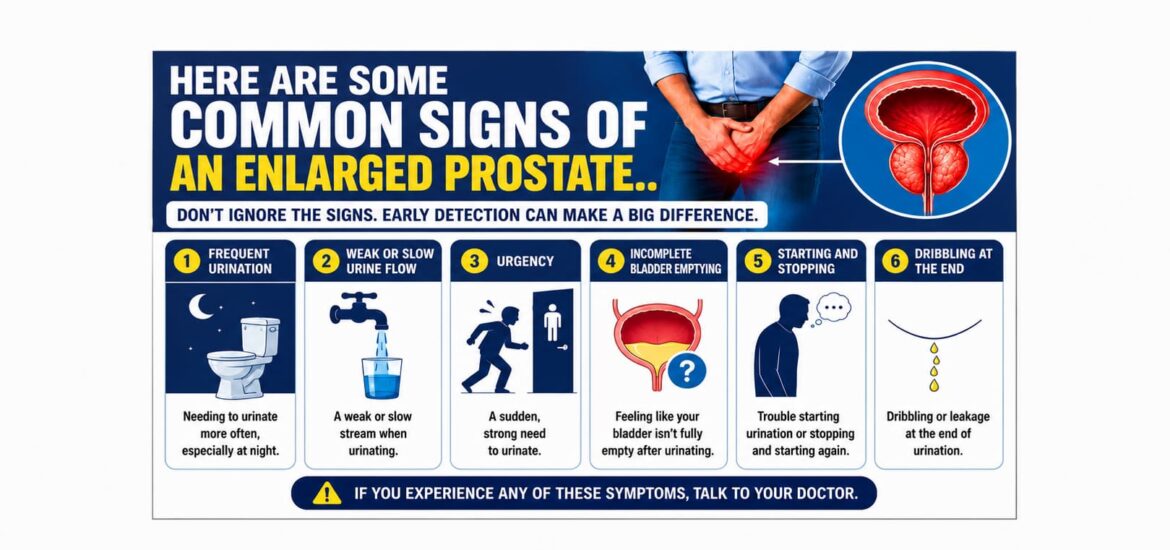
In males, the prostate is a tiny gland beneath the bladder, and has important functions in the reproductive system. As men age, their prostates may start to grow larger, which is called benign prostatic hyperplasia (BPH). While generally non-cancerous, prostate growth can lead to uncomfortable urinary symptoms which can impact on everyday life. Early identification of the warning signs can lead people to find the right medical treatment and ensure good urinary and reproductive health.
What is this: Enlargement of the prostate?
An enlarged prostate happens when the prostate gets bigger and presses upon the tube (urethra) through which urine passes out of the body from the bladder. Such pressure may disrupt regular urination and cause a number of symptoms. Enlarged prostate is not cancer, but there can be some symptoms that are the same, so it is important to get medical evaluation.
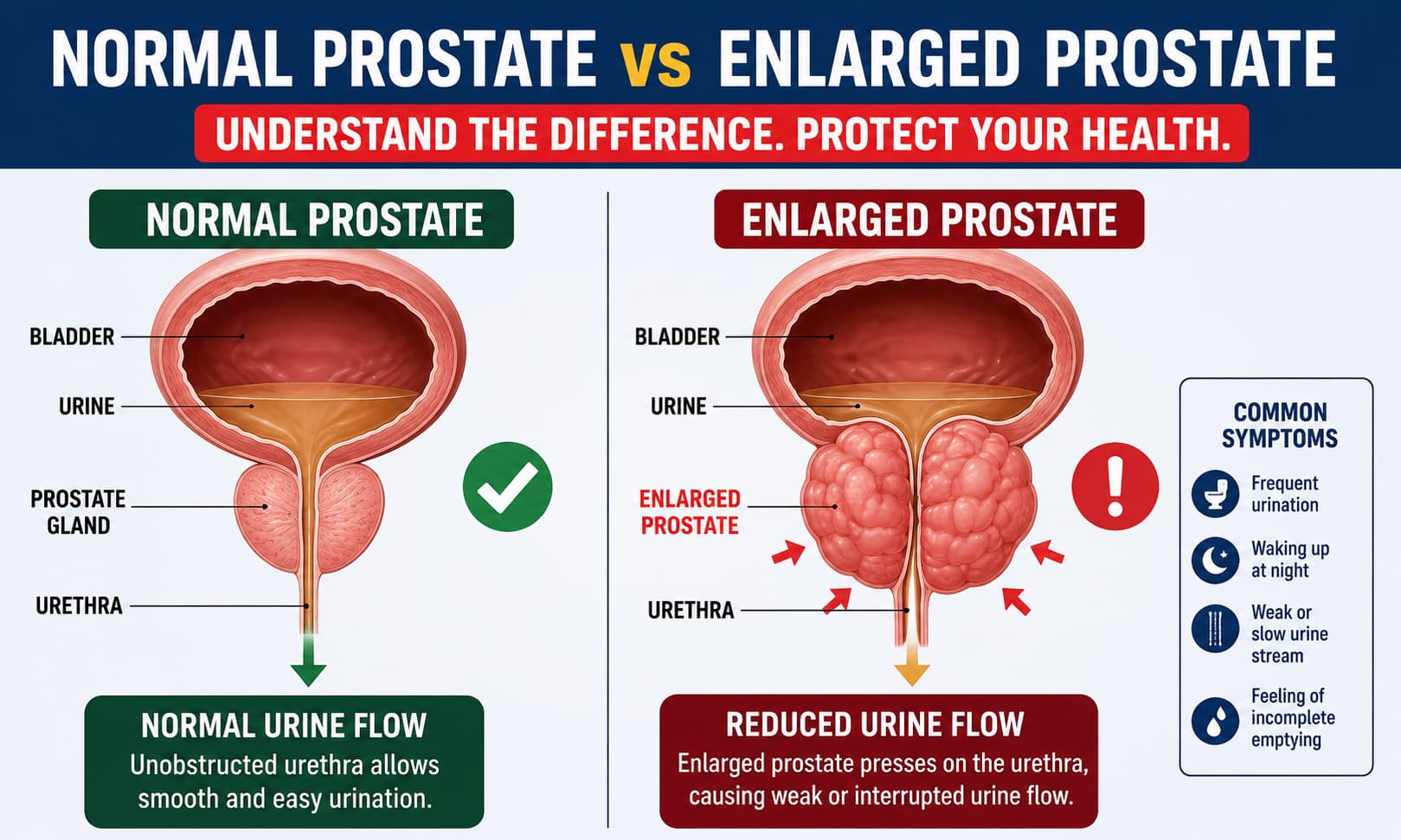
Some of the most frequent symptoms of prostate enlargement are:
If a man is aware of prostate enlargement symptoms, he will be able to seek medical attention before complications arise.
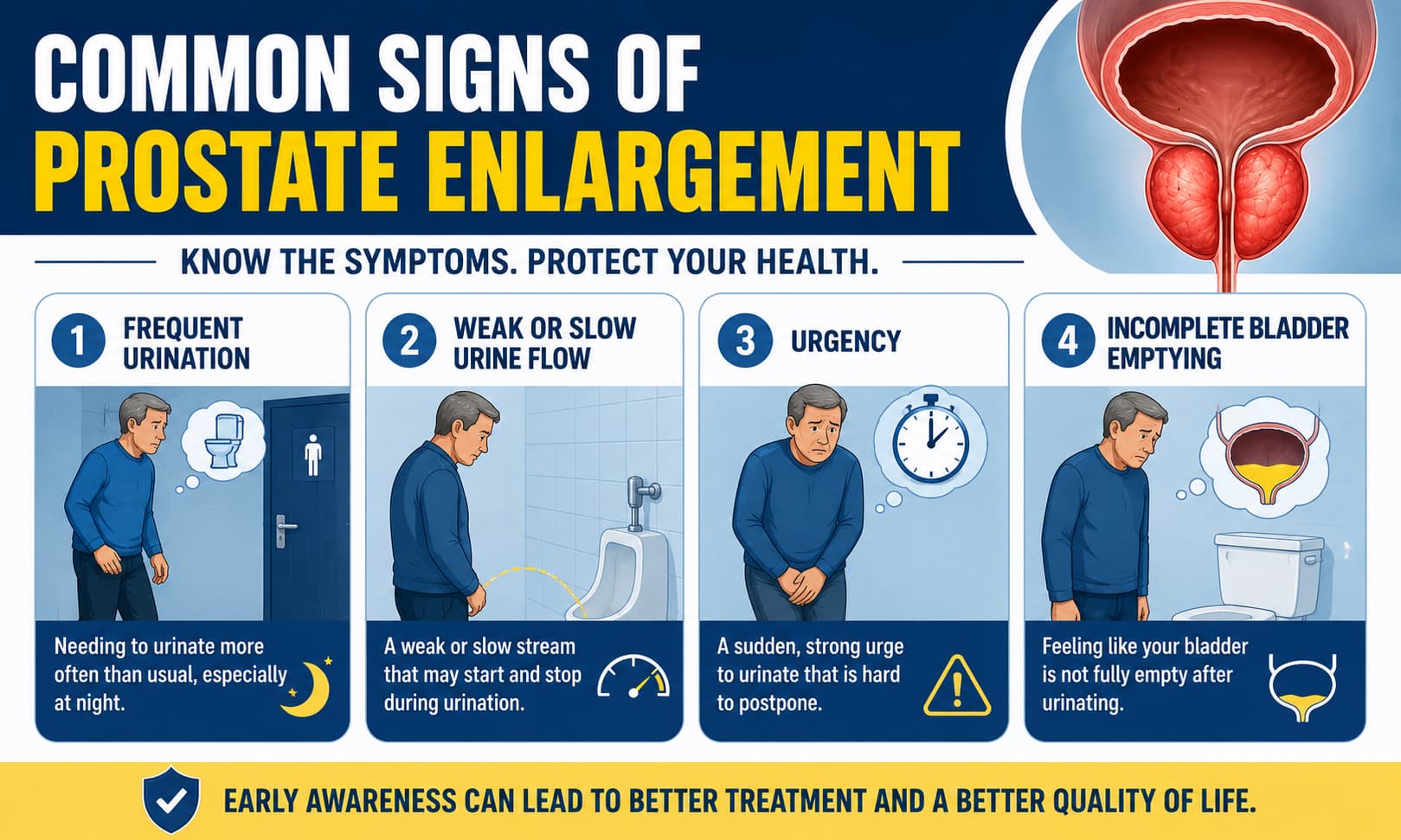
Frequent Urination
The most common symptom is an increased need to urinate, especially at night.
Difficulty Starting Urination
Men may experience trouble or hesitation in getting started urinating.
Weak Urine Stream
A larger prostate can cause an obstruction in the urine flow.
Incomplete Bladder Emptying is when the person has a sensation of not using the toilet or urinating fully.
A lot of people experience a sensation that they didn’t empty their bladder enough.
Urgency to Urinate
If there is a sudden and strong need to urinate, it may happen at an unexpected time.
Difficulty urinating, may interrupt or dribble in the toilet.
The flow of urine can be interrupted and resumed or one might dribble after urination.
Some of them may be associated with some of the symptoms of prostate cancer, so proper medical evaluation is important. Other symptoms of prostate cancer include blood in the urine and blood in the semen, or constant pain in the pelvic region.
How early diagnosis is important.
Prompt diagnosis can prevent complications like urinary retention, urine damage and kidney issues. Tests may be recommended to try to find out if the symptoms are due to an enlarged prostate or another cause.
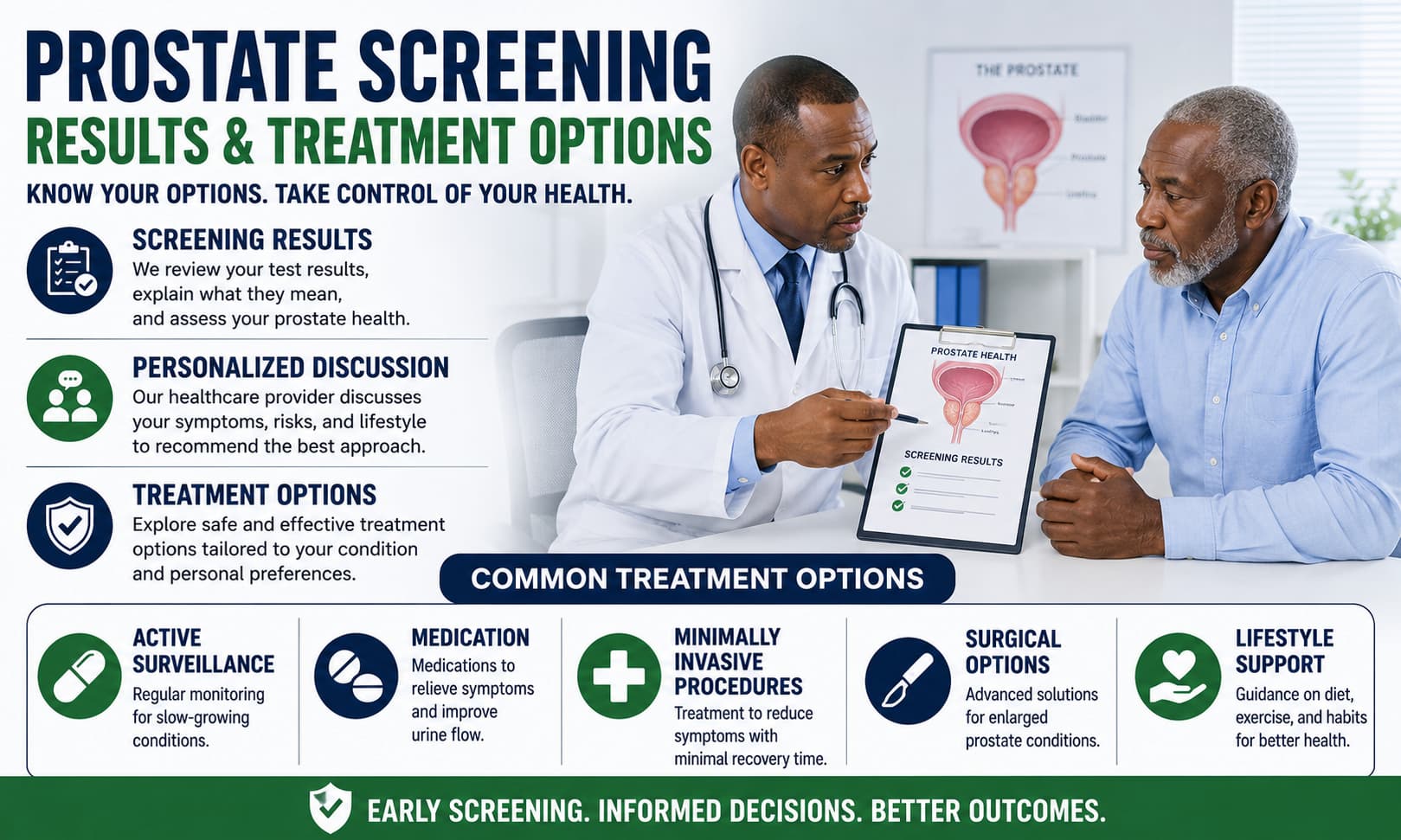
Treatment may differ, depending on the diagnosis. Treatment options for modern enlarged prostate are lifestyle changes, medications and in some instances surgery. If cancer is found, there may be talk of the treatment options for prostate cancer depending on the stage and severity of the cancer.
Conclusion
If men are aware of the symptoms of an enlarged prostate, they may be able to get prompt treatment and prevent complications. If a person has these symptoms, she or he should not ignore them, and should see a medical professional about them. Regular medical assessments are crucial to maintain long-term health and well-being, as some symptoms can be mistaken for those of prostate cancer and due to the similarity of symptoms and the presence of other signs of prostate cancer, regular medical evaluations are essential.
